#InsideDCDYNAMIC – Shakeel Akram
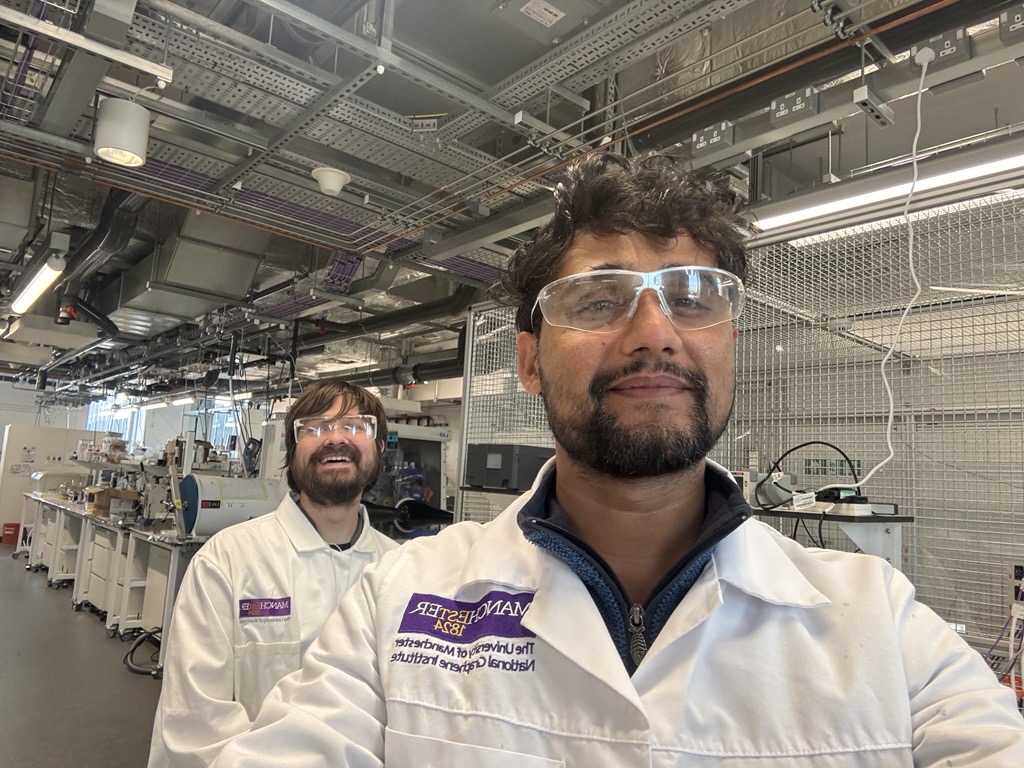
Shakeel Akram, PostDoc
Department of Electrical & Electronic Engineering
University of Manchester
Department of Electrical & Electronic Engineering
University of Manchester
What is your role in DCDYNAMIC, and what are you currently working on?
I am working as a Postdoctoral Research Associate on the DCDYNAMIC project. My research focuses on investigating DC electrical treeing behaviour in cable insulating material subjected to thermal and mechanical ageing under sequential and combined stress conditions.
What originally inspired you to specialise in this field?
As a high-voltage engineer, I was motivated to join the DCDYNAMIC project because it addresses key challenges in the reliability of future offshore windfarm HVDC cable systems. As the world transitions towards renewable energy, reliable HVDC cable systems are becoming increasingly important for transmitting power from offshore wind farms. DCDYNAMIC provides a unique opportunity to contribute to this challenge by investigating insulation ageing and degradation mechanisms, helping to improve the reliability, lifetime, and sustainability of future HVDC networks. In addition, DC electrical treeing is a relatively underexplored area of research, and with the increasing interest in connecting future floating offshore wind farms using dynamic HVDC cables rather than conventional AC array cables, understanding DC insulation degradation and failure mechanisms is becoming more important than ever.
Why is your specific research topic important for floating offshore wind or HVDC technology?
My research is important because dynamic HVDC cables for floating offshore wind will experience a more complex combination of electrical, thermal, and mechanical stresses than conventional static cable systems. By studying DC electrical tree initiation and growth in XLPE cable insulation after sequential and combined ageing, my work helps to understand how insulation defects may develop and propagate under realistic service conditions. This knowledge is essential for improving cable reliability, extending service lifetime, and supporting the safe deployment of future floating offshore wind and HVDC transmission networks.
What has been the most exciting or challenging part of your research so far?
The most exciting and challenging part so far has been developing and carrying out experiments that combine high-voltage electrical testing with thermally and mechanically aged polymeric insulation samples. Working with DC electrical treeing is challenging because the behaviour is strongly influenced by material condition, electrode geometry, ageing history, and test conditions. However, this also makes the research very rewarding, as each result helps build a clearer understanding of how cable insulation behaves under stresses that are relevant to future dynamic HVDC applications. Above all, one of the most rewarding aspects of the project has been working alongside experts from world-leading universities and industry partners across Europe. Presenting results, exchanging ideas, and learning from such experienced researchers has been both inspiring and invaluable for my development as an early-career researcher.
What new skills are you developing through your involvement in DCDYNAMIC?
Through my involvement in DCDYNAMIC, I am developing a wider range of technical and professional skills. These include advanced high-voltage laboratory testing, preparation and ageing of polymeric insulation samples, analysis of electrical treeing behaviour, experimental design, scientific writing, and interpretation of complex degradation mechanisms. I am also strengthening my skills in interdisciplinary collaboration, communication with academic and industry partners, project planning, and presenting technical findings to a wider research community.
Coffee or tea?
Tea for me, especially a strong cup of chai. I do enjoy coffee occasionally, but tea is the regular choice.
Early mornings in the lab or late-night data analysis?
Late-night data analysis suits me well, especially when I need quiet time to focus on results and figures. That said, early mornings in the lab are often the best time to get experiments running smoothly
Spring or Autumn?
Autumn. I like the cooler weather, the colours, and the calmer feeling after summer. It is also a good season for warm drinks, comfort food, and getting focused on work before winter.
What do you enjoy doing outside the lab or office?
Outside the lab, I enjoy spending time with family, playing cricket, and staying involved in sport. I also like working on practical projects and business ideas around cricket equipment, which gives me a good balance between research life and personal interests.
Best recent series/movie or novel?
I usually enjoy anything with a strong story, especially historical, science, or documentary-style content. Recently, I have been more drawn to informative films, series, and books that connect technology, history, and real-world human stories.